Publishing a festival schedule without creating confusion
How to distribute a festival schedule more clearly, reduce confusion for festival-goers, and keep control over event communication.

Publishing a festival schedule should make the experience clearer, not more confusing. Yet many events end up scattering information across Instagram, Facebook, PDFs, stories, websites, and last-minute posts. The result is predictable: festival-goers no longer know which version is the right one, miss shows, and create avoidable pressure on the team.
The problem is not the schedule itself. The problem is how it is distributed.
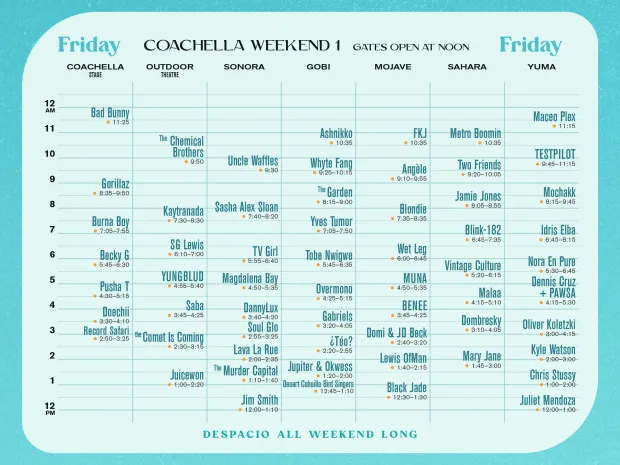
Managing last-minute changes
When the schedule circulates across too many formats without a clear single source, every update creates a new risk of confusion. A time change on one stage, a cancellation, a move, or a logistical clarification quickly becomes hard to follow. And the denser the event, the more this confusion creates a real cost for both the public and the organizers.
To publish a festival schedule well, organizers first need to think in terms of clarity and consistency. Festival-goers need to understand quickly:
- who is playing
- at what time
- on which stage
- and what has changed
But they also need to be able to find that information easily, at the right moment, on the right support.
Reducing confusion for festival-goers
This is where a simple social post quickly shows its limits. A story disappears. A carousel becomes outdated. A PDF is rarely consulted at the right moment on mobile. And a website not designed for on-the-ground use can make reading the schedule painful during the event.
The right approach is to centralize the schedule in a clear, mobile, updated environment designed for real festival-goer usage. That not only reduces confusion, it also improves preparation ahead of time. When people understand the program better, they plan more effectively, spot the artists they want to see, organize their days, and enjoy a smoother experience.
For organizers, distributing schedules better also means regaining control over communication. Instead of multiplying micro-corrections across several channels, the team has a cleaner source of truth that is easier to maintain and more credible.
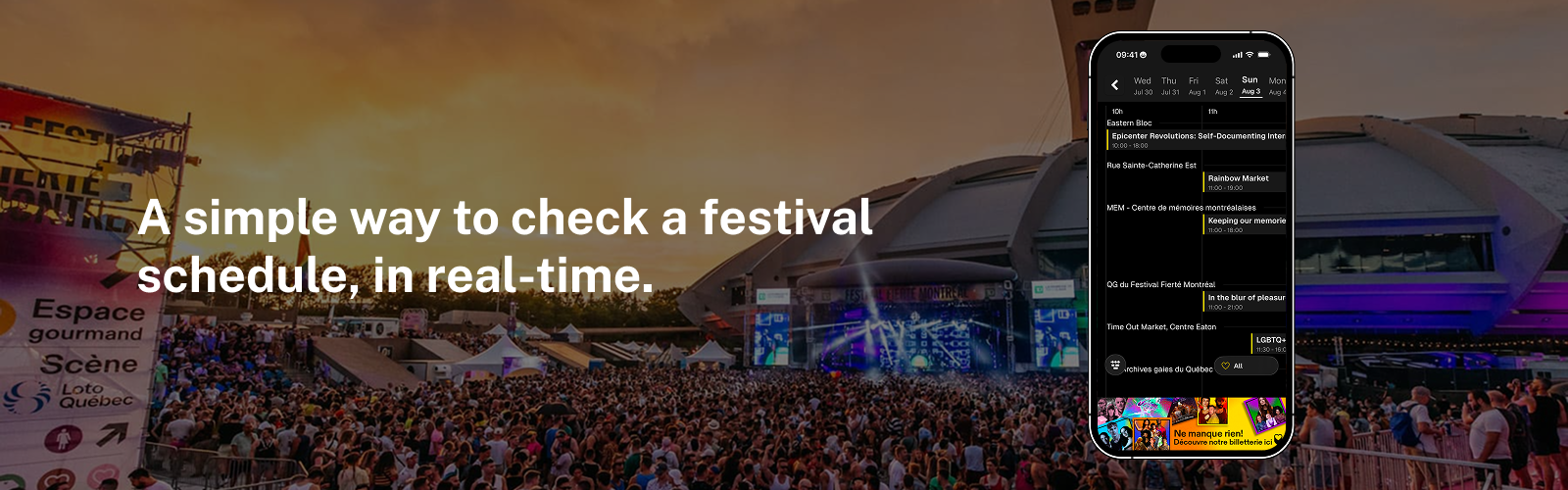
Centralizing schedules to manage the event better
This is exactly where an app like FEST makes sense. By centralizing artists, programming, schedules, and possible updates in one place, it avoids fragmented information. Festival-goers get a clear program, useful reminders, and a simpler reading experience. Teams gain consistency and efficiency.
Publishing a festival schedule well is not just about putting the running order online. It is about making the program easy to consult, reliable, and updated in real time.
FEST App is the simplest app for festival organizers. With ultra-fast setup, a free license, and partner integrations, it is the reference for festival mobile apps. In fact, your festival may already be on FEST.
Our team helps festivals communicate better with their audiences, distribute their programming and ticketing, and create more value for their partners.
Discover the platform and contact the team: https://festapp.io/contact